- Endodontics
Why choose bioceramics for pulp capping procedures?
Bioceramic materials are already well-established in dentistry for certain procedures, check out their use in direct pulp capping cases.
Bioceramic materials are already well-established in dentistry for certain procedures, and in others, they are becoming increasingly popular, such as pulp capping, due to their beneficial chemical and biological properties. These materials are composed of ceramics that interact favorably with biological tissues, providing a biocompatible response and stimulating the regeneration of dental tissues.
Furthermore, the use of bioceramics is highly versatile; they are resistant to degradation and have sealing properties that are crucial for protecting the pulp and preventing infections from occurring. To better understand why you should choose a bioceramic for pulp capping cases, follow the recommendations of Ana Elisa Ferreira, a dentist and endodontist graduated from the University of São Paulo (USP) and a scientific communication analyst at Angelus.
The dentist explains that for each type of pulp capping, a certain outcome is expected. "Direct pulp capping is performed when the pulp is manifestly exposed (bleeding). The capping is intended to stimulate the formation of reparative dentin in the exposed area, called a 'dentin bridge' or 'mineralized barrier'. When the pulp capping is indirect, there is no apparent pulp exposure (no bleeding) and the thickness of the remaining dentin is very thin, so the capping stimulates the formation of reactive dentin."
In the past, calcium hydroxide cement was widely used for pulp capping procedures, but today the literature indicates the use of calcium silicate-based materials (MTA).
But why is bioceramic material (MTA) currently the material of choice for the direct pulp capping technique? Why should we use it instead of calcium hydroxide or resin-based materials?
When MTA (Mineral Trioxide Aggregate) and other calcium silicate-based cements are used in vital pulp therapy procedures on permanent teeth with symptomatic or asymptomatic irreversible pulpitis, success rates range from 85% to 100% in 1-2 years. However, it is important to note that calcium hydroxide, glass-ionomer cements, and resin-based materials show less favorable clinical results, with success rates ranging from 43% to 92%.
Ana emphasizes that one of the great advantages of MTA is that it can be applied in humid areas without losing its properties. She explains that "due to their hydrophilic characteristics, bioceramics can be used in a humid environment, with humidity being responsible for activating the chemical setting reaction of the material. The mixture has good properties for sealing root perforations, as it does not lose its characteristics in a humid environment containing, for example, blood and saliva."
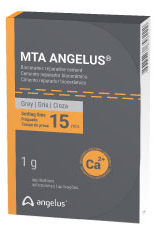
Can I use any type of bioceramic: powder or liquid (MTA Angelus® and MTA Repair HP) and ready-to-use (BIO-C® Repair) for pulp capping cases?
Yes, it is possible, but it is important to keep in mind that bioceramics rely on moisture for setting. In the case of powdered versus liquid MTAs, the setting reaction occurs in 15 minutes, as moisture is already present during the manipulation of these products. In the case of a ready-to-use product like BIO-C® Repair, setting depends on the moisture in the dental tissues, leading to an average setting time of 120 minutes.
Steps for direct pulp capping
Finally, Ana Elisa lists all the steps for the direct pulp capping technique using a bioceramic. See below:
1. Remove all carious tissue;
2. Decontaminate the pulp chamber with sodium hypochlorite;
3. Neutralize with saline or distilled water;
4. Apply MTA to the exposed site;
5. Apply a thin layer of temporary restoration;
6. Apply glass ionomer;
Wait 6 months for radiographic control and symptom evaluation
If the feedback is positive:
7. Partial removal of the glass ionomer, leaving only a lining;
8. Conventional composite resin restoration.